The Definitive Guide to Tattoo Pain
Nerve Endings, Anatomy, and Reality
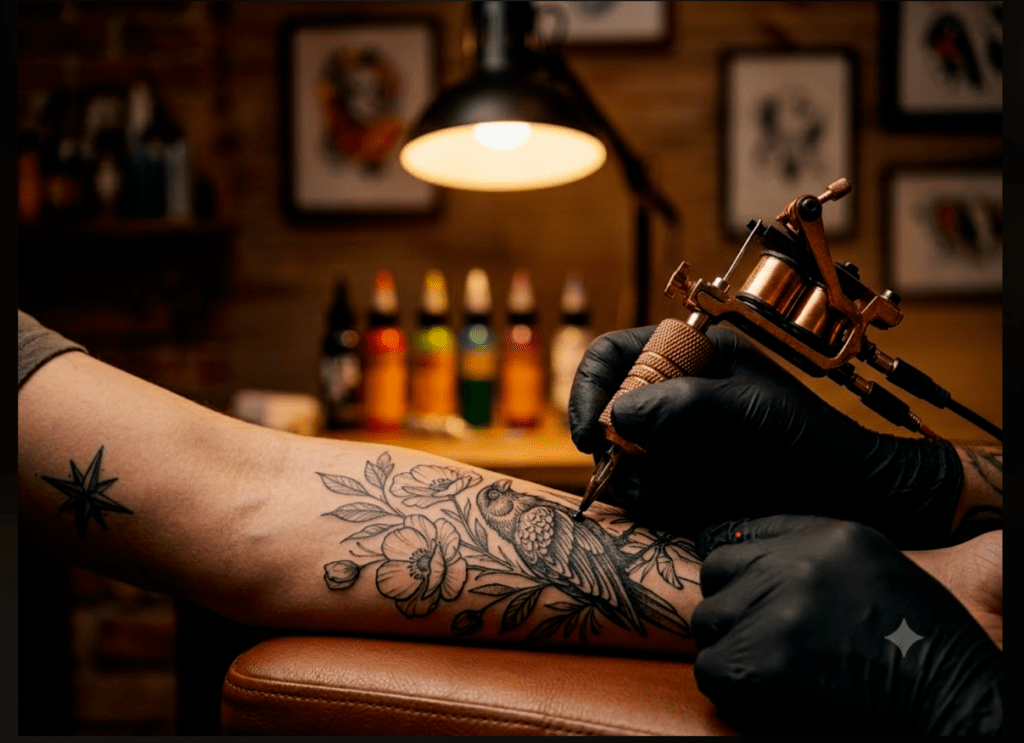
The moment a needle meets skin at RJ Tattoo studio where anatomy determines everything about what you’ll feel.
Every person sitting in a tattoo at RJ Tattoo studios chair asks the same question.“How bad is this going to hurt?” and every artist gives the same honest answer: “It depends on where.”
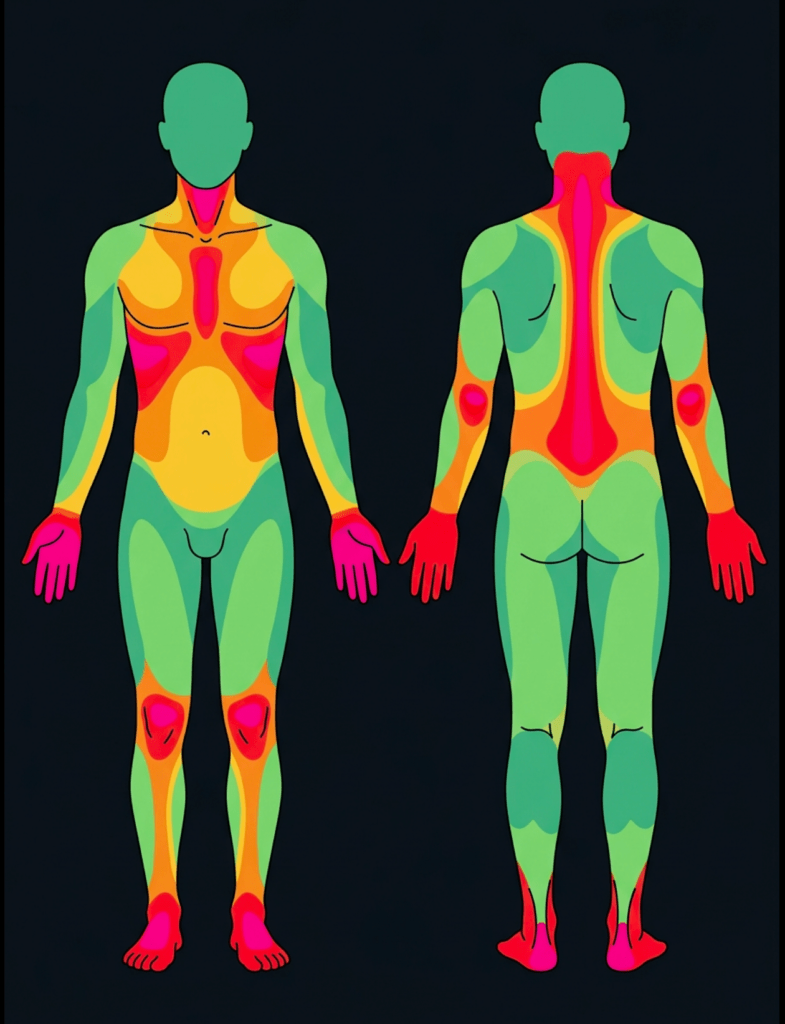
Most pain charts stop there. A colour-coded body map, a 1–10 scale, and a pat on the back. This guide goes deeper into the anatomy, the neuroscience, and the strategies that separate a manageable session from a miserable one.
Whether you are looking for a meaningful custom piece or a professional piercing, RJ Tattoo Studio Pune offers a world-class experience backed by 18+ years of expertise. With premium locations across both Pune and Mumbai, our internationally trained artists specialize in everything from hyper-realism and religious Shiva designs to delicate fine-line work. As the most trusted RJ Tattoo Studio Pune, Mumbai destination, we prioritize your safety and comfort by using globally certified equipment for all body modifications. Visit RJ Tattoo Studio Pune,Mumbai to transform your vision into permanent art with the confidence of our lifetime ink guarantee.
How a Tattoo Needle Actually Creates Pain
A tattoo machine drives needles into the dermis the second layer of skin, roughly 1–2 mm deep at 80–150 punctures per second, depositing ink that your immune cells lock in place permanently.
That rapid-fire puncturing triggers three distinct pain signals:
| Signal | What You Feel | Cause |
| Sharp / stinging | Bright, immediate pain | Needle piercing the epidermis and activating nociceptors (pain receptors) |
| Burning | Spreading warmth after sustained work | Localised inflammation and histamine release |
| Deep ache | Dull, resonating throb | Needle vibrating close to the periosteum (the nerve-rich membrane around bone) |
The intensity of each signal depends entirely on the anatomy underneath the needle.
The Three Factors That Determine Pain
1. Nerve Ending Density – The Primary Driver
Your skin is not uniformly sensitive. Different regions contain wildly different concentrations of nerve endings per square centimetre.
High-density (more pain): Fingertips (~2,500 receptors per cm²), lips and face (served by the massive trigeminal nerve), soles of feet, inner wrist, groin, and armpits.
Low-density (more tolerable): Outer upper arm, outer forearm, upper back, outer thigh, and outer calf areas where nerve endings are tuned for broad pressure rather than fine detail.
2. Bone Proximity The Vibration Amplifier
When there’s minimal tissue between skin and bone, needle vibration transfers directly to the periosteum, which is packed with pressure-sensitive nociceptors.
Worst offenders: Ribs (thin intercostal muscles plus breathing movement), sternum (zero muscle, flat bone), spine (bony spinous processes under millimetres of tissue), collarbone (completely subcutaneous), shin (no muscle on the front face), and kneecap/elbow (tight skin stretched over bony prominences).
Why muscle matters: Muscle acts as a shock absorber. A tattoo on the outer bicep (thick muscle over the humerus) feels dramatically different from one on the inner elbow, where the bone sits just below the skin.
3. Skin Thickness – The Overlooked Variable
Skin varies from 0.5 mm (eyelids) to 4 mm (upper back). Thicker skin means the needle travels further before reaching nerve-dense layers, and more tissue distributes the mechanical force.
Thin-skin problem areas: Inner arm, behind the ear, inner thigh, tops of hands and feet.
Thick-skin comfort zones: Upper back, outer forearm, outer thigh, buttocks, deltoid.
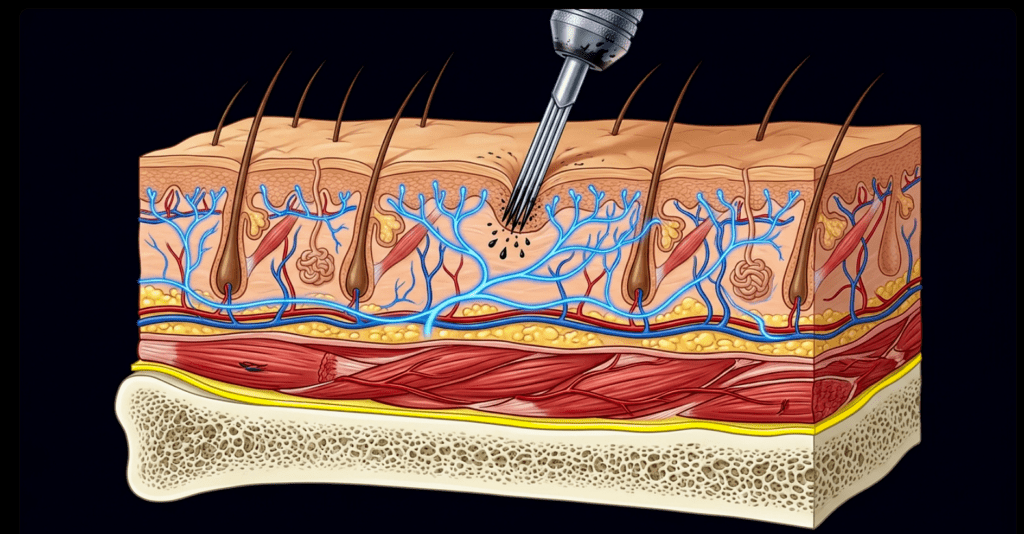
Skin → subcutaneous fat → muscle → periosteum → bone. The more layers between needle and bone, the less you feel.
The Full-Body Pain Map – With Anatomy
Head & Neck
| Area | Pain | Why |
| Scalp | 7/10 | Thin skin over skull; dense nerve network |
| Behind the ear | 8/10 | The mastoid process bone sits under paper-thin skin |
| Throat | 9/10 | Extremely thin skin over tracheal cartilage; dense cervical plexus innervation |
Torso
| Area | Pain | Why |
| Chest (pectoral) | 5–6/10 | Moderate with muscle; worse near sternum and collarbone |
| Sternum | 8–9/10 | Zero muscle, flat bone, pure periosteal vibration |
| Ribs | 8–9/10 | Thin muscle, curved bone, breathing movement — widely considered the most painful common placement |
| Upper back | 3–4/10 | Thick muscle mass (trapezius, lats). One of the most comfortable large-canvas areas |
| Spine | 8/10 | Bony processes with minimal tissue cover |
| Stomach | 6–7/10 | Soft, stretchy skin; worsens significantly below the navel |
Arms
| Area | Pain | Why |
| Outer upper arm / deltoid | 2–3/10 | Thick muscle, moderate nerve density. The gold standard for a first tattoo |
| Outer forearm | 3–4/10 | Well-muscled, comfortable. A popular and easy sit |
| Inner forearm | 4–5/10 | Thinner skin, closer to the median nerve. Still very manageable |
| Elbow ditch | 7–8/10 | Thin skin over tendons and the median nerve |
| Elbow point | 8/10 | Bone under tight skin; the ulnar nerve runs right behind it |
| Hands & fingers | 8–9/10 | Highest nerve density in the body, numerous small bones, no fat padding |
Lower Body
| Area | Pain | Why |
| Outer thigh | 2–3/10 | Large muscle, moderate skin thickness. Top pick for first-timers |
| Inner thigh | 7–8/10 | Thin skin, proximity to femoral nerve and artery |
| Knee | 8–9/10 | Thinly covered bone front and back |
| Shin | 7–8/10 | Subcutaneous bone — no muscle, no fat |
| Outer calf | 3–4/10 | Excellent muscle cushion from the gastrocnemius |
| Ankle | 7–8/10 | Ankle bones covered by thin skin and tendons only |
| Top of foot | 8–9/10 | Tendons over metatarsal bones, high nerve density |
| Sole of foot | 9–10/10 | Highest nerve density in the lower body. Painful and poor ink retention |
Why Two People Rate the Same Spot Differently
Anatomy sets the baseline, but individual perception varies by 30–50%:
Hormones: Oestrogen sensitises nociceptors women often report higher pain scores but demonstrate greater endurance over long sessions.
Menstrual cycle: Pain sensitivity peaks in the late luteal phase (days before menstruation) and is lowest during the follicular phase (the week after). Scheduling accordingly can help.
Body composition: More subcutaneous fat = more cushion. Someone with higher body fat may find ribs less painful than someone with visible rib definition.
Sleep: Under 6 hours the night before measurably increases pain sensitivity by disrupting cortisol and serotonin levels.
Anxiety: The brain’s anterior cingulate cortex amplifies pain when you’re anxious. First-timers consistently report higher pain than experienced collectors at the same location.
Science-Backed Pain Management
Before Your Session
- Sleep 7–9 hours restores serotonin and cortisol, which regulate pain gating in the spinal cord.
- Eat a full meal 1–2 hours before low blood sugar triggers adrenaline, which heightens pain and increases fainting risk.
- Hydrate for 24–48 hours – hydrated skin is more pliable and takes ink with less resistance.
- Skip alcohol for 24 hours – it thins blood, increases bleeding, and lowers pain tolerance despite its “numbing” reputation.
- Limit caffeine – high intake increases nervous system excitability.
During Your Session
- Breathe deliberately: Inhale 4 seconds, hold 4, exhale 6. This activates the parasympathetic nervous system, directly inhibiting pain signal transmission. The single most effective free tool you have.
- Stay distracted: Music, podcasts, or conversation genuinely reduces activation in the brain’s somatosensory cortex.
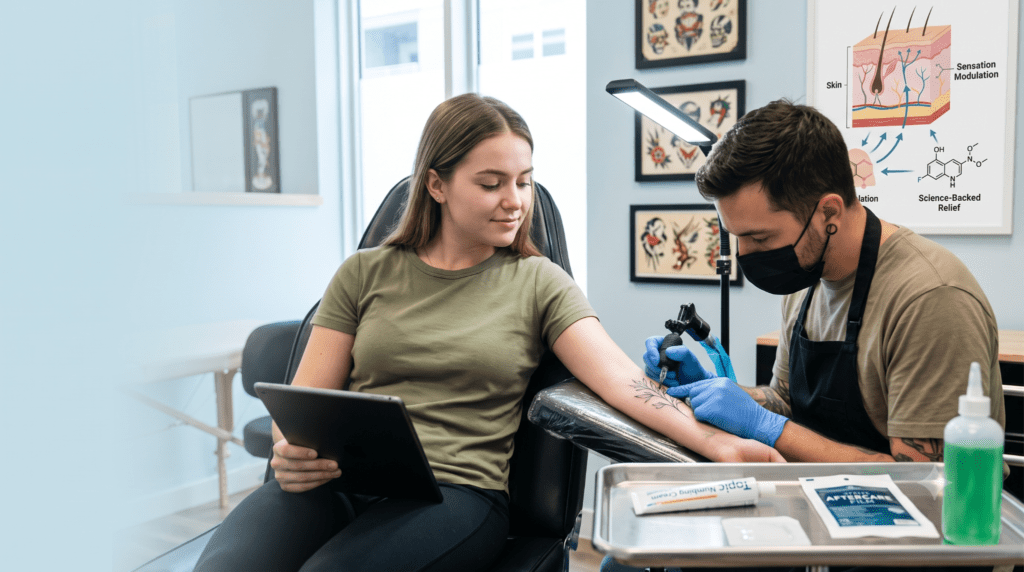
- Numbing cream (with artist approval): Lidocaine-based creams (4–5%) reduce surface stinging when applied 45–60 minutes before. They wear off after 1–2 hours and don’t eliminate deep ache or bone vibration.
- Take breaks: Endorphins peak around 30–45 minutes in but fade after 2–3 hours. A 10–15 minute break every 90 minutes keeps you in the manageable zone.
After Your Session
- Expect sunburn-like soreness for 24–72 hours normal inflammatory response.
- Use paracetamol, not ibuprofen/aspirin for the first 24 hours (blood thinners increase bruising).
- Cold compress (cloth-wrapped, not direct ice) for 10 minutes at a time to reduce swelling.
What Do Tattoo Artists Want You to Know About Pain?
Every experienced artist at our Pune and Mumbai locations will tell you:
The first 30 seconds are the worst. Your brain just needs to calibrate.
Outline hurts more than shading. Lining needles concentrate force, while shading needles distribute it.
Your pain tolerance is not a measure of toughness. “I need a minute” is always respected in our studio.
Frequently Asked Questions
What is the most painful place to get a tattoo?
The ribs, sternum, hands, feet, kneecap, and elbow are consistently rated among the most painful areas due to high nerve ending density, minimal cushion, and close proximity to bone. The sole of the foot is often rated 9-10 out of 10.
What is the least painful spot for a first tattoo?
The outer upper arm (deltoid area), outer forearm, outer thigh (quadriceps), upper back, and outer calf are the most comfortable areas, typically rated 2-4 out of 10.
Why do rib tattoos hurt so much?
Rib tattoos are painful because the intercostal muscles are very thin, the curved bones transfer needle vibration directly to nerve-rich membranes, and the area moves with every breath.
Does numbing cream work for tattoos?
Topical numbing creams (4-5% lidocaine) reduce surface-level stinging when applied 45-60 minutes prior. However, they wear off after 1-2 hours and don’t eliminate deep bone vibration. Always consult your artist first.
About the Author
Raj is a senior tattoo artist and the founder of RJ Tattoo Studio , serving clients across Pune and Mumbai. With years of experience creating custom pieces, Pooja specializes in ensuring clients have a safe, comfortable, and world-class tattoo experience.