Cartilage vs. Lobe Piercing: Why One Heals in Weeks and the Other Takes Months
Your earlobes are soft, squishy tissue full of blood vessels. They heal fast usually 4 to 8 weeks. Your ear cartilage has zero blood supply. That’s not an exaggeration. Zero. So it takes 6 to 12 months. Piercing guns literally shatter cartilage. If someone points one at anything above your lobe, leave. Aftercare for the two is completely different. What works for lobes can actually damage a healing cartilage piercing. At RJ Tattoo Studio in Pune, we only use hollow needles and implant-grade titanium. No exceptions. I get this question almost every week at the studio. Someone walks into RJ Tattoo Studio wanting a helix or a tragus piercing. They had their lobes done years ago maybe as a kid, maybe at a jewellery shop in the mall and it healed in a few weeks without any drama. So naturally, they assume a cartilage piercing will be the same. It won’t be. And I’d rather tell you that honestly right now than have you frustrated three months from now, wondering why your ear is still angry. The thing is, your ear isn’t one type of tissue. It’s two completely different biological materials stitched together, and they heal on completely different timelines. Once you understand why, everything the aftercare, the pain, the patience required starts to make sense. So let me break it down.
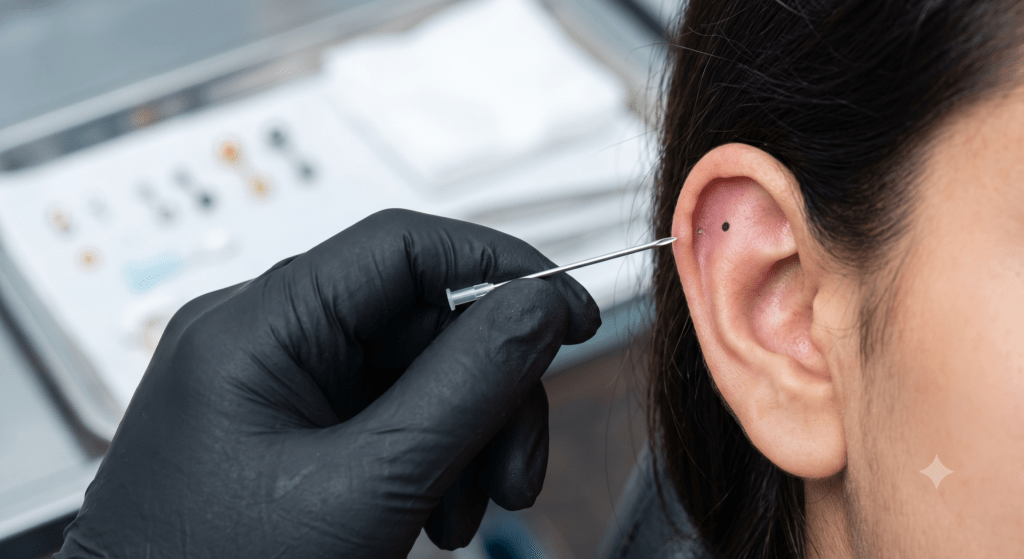
What’s Actually Different About Lobe Tissue and Cartilage?
Your earlobe is soft, fatty tissue loaded with tiny blood vessels. Cartilage is rigid, dense, and has absolutely no blood supply of its own. That one difference is responsible for everything — the healing time, the infection risk, the pain, all of it.
Your Earlobe – Built to Heal
Pick up your earlobe right now. Squeeze it. It’s soft, squishy, almost like a tiny pillow. That’s because it’s mostly made of fat (adipose tissue) and connective skin. No bone. No cartilage. No rigid structure. But here’s what makes it special: it’s packed with blood vessels. Tiny ones called capillaries run all through it. So when a needle goes through your lobe, your body doesn’t panic it responds. Blood rushes to the wound carrying oxygen, white blood cells, platelets, everything your body needs to start repairing the damage. The healing team arrives fast because the highway (your blood supply) goes right to the doorstep. That’s why lobe piercings heal in about 4 to 8 weeks. Your body has every resource it needs, delivered at full speed.
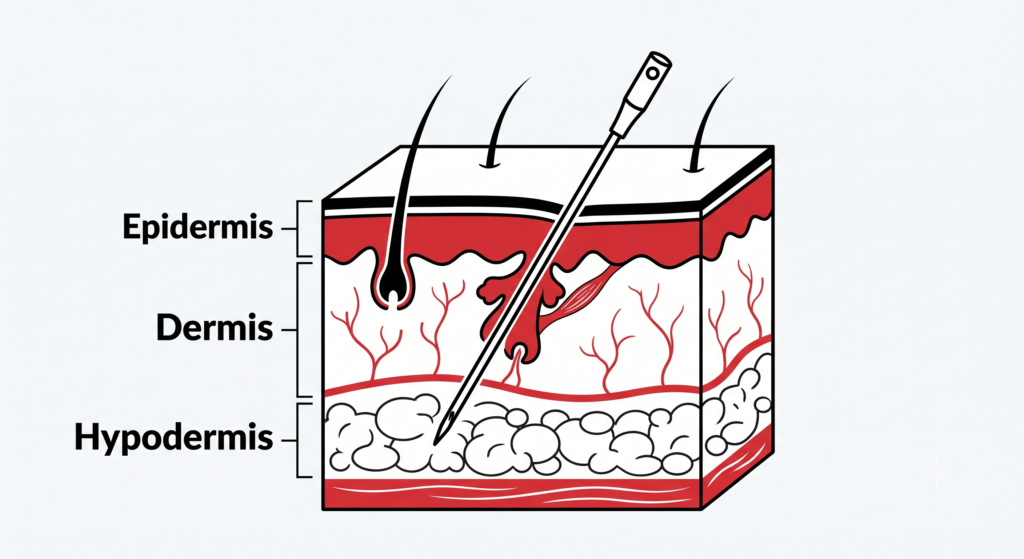
Your Cartilage – A Biological Desert
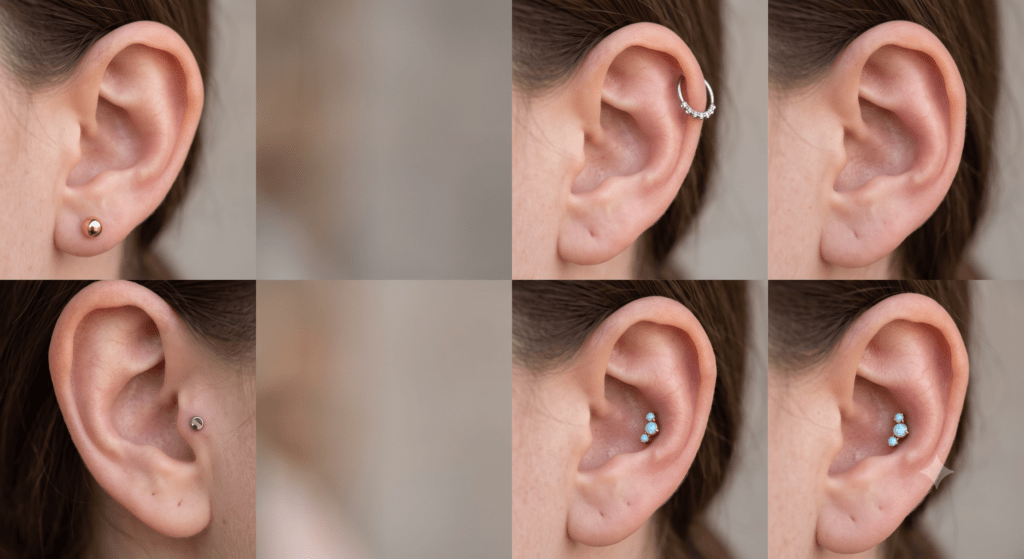
Now pinch the top of your ear. The helix. Feel how stiff it is? That’s cartilage a dense, semi-rigid tissue made of collagen fibers. It’s the same stuff in your nose, your ribs, and the discs in your spine. And here’s the part most people don’t know: cartilage has no blood vessels. None. Not a single one running through it.
The cells inside cartilage they’re called chondrocytes, if you want to sound smart at a dinner party — get their nutrients through an incredibly slow process called diffusion. Basically, they absorb what they need from a thin membrane wrapped around the cartilage called the perichondrium. It’s like trying to water a garden by leaving a wet towel on the ground and hoping the moisture seeps in. Compare that to the earlobe, where it’s like blasting a hose directly at the roots.
This is why your helix piercing, your tragus, your conch, your daith any cartilage piercing takes 6 to 12 months to fully heal. Your body desperately wants to fix the wound. It just doesn’t have the delivery system to do it quickly.
Why Do Cartilage Piercings Get Infected So Much More Easily?
Because the tissue can’t fight back fast enough. When bacteria enter a lobe piercing, your immune system floods the area with white blood cells within hours. Problem handled. But cartilage? Those same white blood cells have to diffuse in slowly through the perichondrium. By the time your immune response properly arrives, bacteria has already had a head start. And when a cartilage infection goes bad, it goes really bad. I’ve seen clients come to me not my clients, people who got pierced elsewhere with infections that had spread under the perichondrium and started eating away at the cartilage itself. There’s a medical term for it: perichondritis. In the worst cases, the ear loses its shape permanently. You’ve probably seen fighters with “cauliflower ear” that’s essentially what happens when cartilage gets destroyed and the body fills it in with lumpy scar tissue. This is exactly why we’re borderline obsessive about hygiene at RJ Tattoo Studio in Pune. We autoclave everything. We use implant-grade titanium jewellery the real stuff, ASTM F-136 certified not the “surgical steel” that’s full of nickel. Because with cartilage, there’s no room to cut corners. One contaminated tool, one cheap earring, and you’re looking at months of complications or worse.
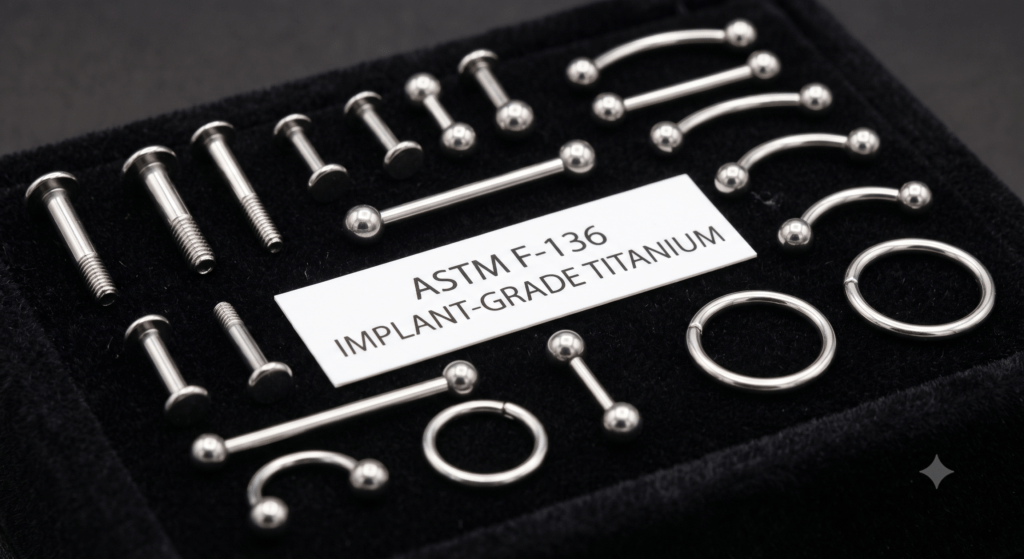
I’m not saying this to scare anyone. I’m saying it because I’ve been doing this for over 18 years and I’ve seen what happens when people treat a cartilage piercing like a casual thing. It’s not casual. It’s a wound in tissue that can barely heal itself.
The Piercing Gun Problem (This One Makes Me Angry)
Piercing guns use brute force to shove a blunt stud through tissue. On cartilage, this doesn’t create a hole it creates a shatter zone of microscopic cracks. A hollow needle, by contrast, cleanly removes a tiny cylinder of tissue and leaves a smooth channel. Look, I’ll be honest this is a topic I feel strongly about. Piercing guns were designed for earlobes. Soft, squishy, forgiving earlobes. And even there, they’re not ideal. But on cartilage? They’re genuinely dangerous.
Here’s what actually happens: a piercing gun fires a pointed stud through the ear using spring-loaded force. On a soft earlobe, the tissue compresses and separates. Fine. But cartilage doesn’t compress. It’s rigid. So instead of separating cleanly, the tissue shatters. You can’t see it from the outside, but internally, tiny cracks radiate outward from the piercing site like dropping a rock on a car windshield.
Those microfractures cause three problems that compound on each other: First, inflammation goes through the roof. Your body isn’t just healing one clean hole it’s trying to repair dozens of tiny cracks in the surrounding cartilage. The swelling gets intense.
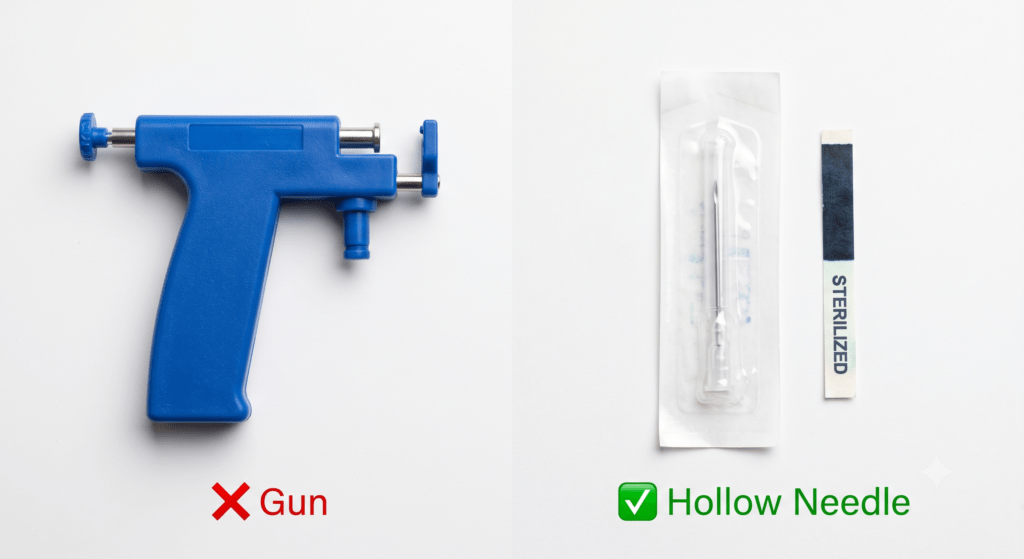
Second, infection risk multiplies. Those fractured pockets become hiding spots for bacteria. And remember your immune system is already slow to respond in avascular tissue. Now it has to fight an enemy hiding in cracks it can barely reach. Third, keloids and scarring. All that extra tissue damage triggers your body to overproduce collagen during healing. The result? Raised, permanent bumps that people desperately Google “how to get rid of piercing bump” about for months afterward. A hollow surgical needle avoids all of this. It removes a clean, tiny cylinder of tissue. The jewellery slides into a smooth channel. No shattering. No cracks. No unnecessary collateral damage. Every single piercing at RJ Tattoo Studio lobes, helix, tragus, conch, septum, you name it is done with a sterile, single-use hollow needle. We don’t own a piercing gun. We never have. Thinking about getting a cartilage piercing in Pune? Don’t gamble with your ear at a mall kiosk. Send us a message on WhatsApp we’ll walk you through the process, the jewellery options, and what to honestly expect during healing. No pressure, just straight answers.
The Aftercare Is Completely Different (And Most People Get This Wrong)
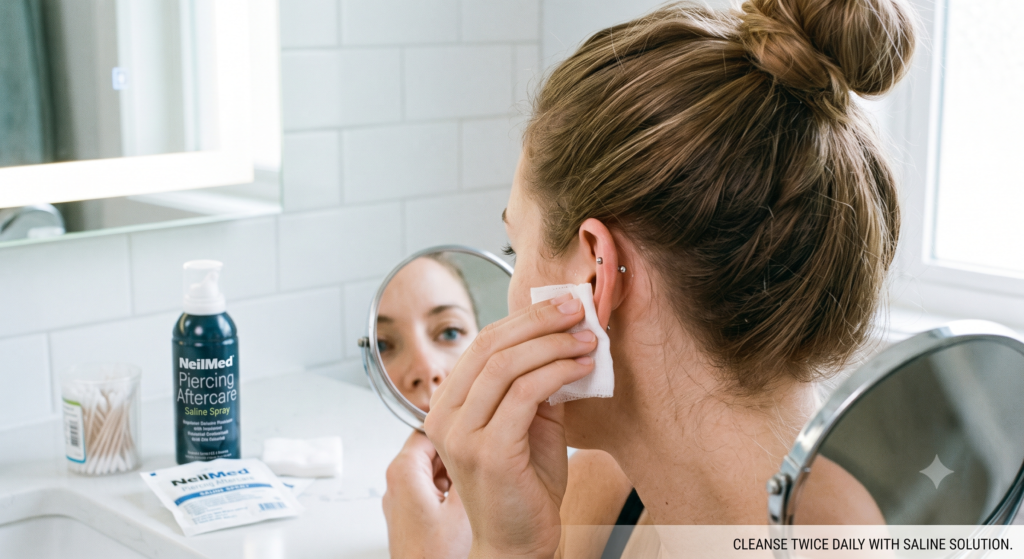
What heals a lobe piercing can actually damage a cartilage piercing. The biology is different, so the aftercare has to be different too. This is where I see the most mistakes people treating all ear piercings the same way. Lobe Piercings Simple and Forgiving (4-8 Weeks) Spray or soak with sterile saline twice a day. That’s it. Nothing fancy. Stop twisting the jewellery. I know your aunt told you to rotate it. She was wrong. Twisting tears the fragile new skin cells forming inside the channel and pushes surface bacteria into the wound. After 6 to 8 weeks, you can usually swap in your favourite earrings. Cartilage Piercings Patience is Everything (6-12 Months) Saline only. Twice a day. Do NOT use alcohol, hydrogen peroxide, Betadine, Dettol, or those “piercing aftercare solutions” you find online. These chemicals are too harsh they kill the fragile new cells that are already struggling to heal in avascular tissue. Don’t sleep on it. I cannot stress this enough. Sleeping on a healing cartilage piercing compresses the channel and restricts the already glacial nutrient diffusion. Buy a travel pillow with a hole in the center. Your ear will thank you at 3 AM. Don’t touch it. Not to check if it’s healing. Not to show your friend. Not to adjust the jewellery because it looks crooked. Every time you touch it, you introduce bacteria into tissue that can’t fight back quickly. Don’t change the jewellery for at least 6 months. It might look healed on the surface after 8 weeks. It’s not. The internal channel the part you can’t see takes much, much longer to stabilize in cartilage. Swapping jewellery too early is one of the top reasons people get those dreaded piercing bumps. Watch for these red flags: Redness that spreads away from the piercing. Heat radiating from the ear. The ear shape changing or puffing up. Thick green or yellow discharge with a smell. If you notice any of these, see a doctor. Don’t DM an influencer for advice. See an actual doctor.
How Do You Pick the Right Place for Ear Piercing in Pune?
A safe ear piercing needs three things: autoclave sterilization, implant-grade metals, and a trained professional with a hollow needle. If even one of these is missing, walk out. I don’t care how cheap the price is. Here’s a quick checklist take a screenshot if you want: Does the studio use a medical-grade autoclave? (Alcohol wipes don’t count. Neither does “we dip it in Dettol.”) Do they use single-use, sealed hollow needles? (If you see a piercing gun, run.) Is the jewellery implant-grade titanium (ASTM F-136) or solid 14k+ gold? (“Surgical steel” is a marketing term it usually contains nickel, which is a common allergen.)Do they give you a written aftercare guide for your specific piercing type? (Not just “keep it clean.”) Has the piercer been trained in piercing-specific anatomy? (Tattooing and piercing are different disciplines.) At RJ Tattoo Studio in Pune, this isn’t our “premium package.” This is just… how we do every piercing. The autoclave runs before we open the doors. The needles come out of sealed, single-use packaging in front of you. The jewellery is ASTM F-136 certified. We don’t offer a “budget option” because there is no safe budget option for something going into your body.
Frequently Asked Questions About Ear Piercing
Q: Why do cartilage piercings take so much longer to heal than lobe piercings? A: Simple biology. Your earlobe is packed with blood vessels that rush healing nutrients to the wound. Cartilage has zero blood supply — nutrients have to slowly diffuse in from the surrounding membrane. Same body, completely different delivery systems.
Q: Can I use a piercing gun for my helix or tragus? A: Please don’t. Piercing guns shatter cartilage because they use blunt force on rigid tissue. The microfractures cause intense swelling, higher infection rates, and those stubborn bumps that never seem to go away. Always go to a professional who uses hollow needles.
Q: How much does ear piercing cost in Pune? A: It depends on the location on your ear and the jewellery you choose. At RJ Tattoo Studio, our pricing includes implant-grade titanium, full sterilization, and a proper aftercare kit everything you need.
Q: What’s the most painful ear piercing? A: Honestly? The daith and industrial piercings tend to hurt the most because they go through the thickest cartilage. But here’s the thing — the actual piercing takes less than 2 seconds with a sharp hollow needle. It’s a brief pinch, not prolonged agony. Most of my clients say the anticipation was worse than the actual moment.
Q: Can I swim after getting my cartilage pierced? A: Not for at least 8 to 12 weeks. Pools, oceans, lakes, hot tubs all of them are full of bacteria that you do NOT want near an unhealed cartilage piercing. Remember, your cartilage can’t fight off bacteria quickly. Don’t give it extra enemies to deal with. Your ear has two very different tissues living side by side. One heals like a champ. The other needs serious time, patience, and professional care. I’ve been piercing ears (and everything else) at RJ Tattoo Studio in Pune for over 18 years now. And the single biggest difference between a piercing that heals beautifully and one that turns into a nightmare? It’s not the jewellery. It’s not even the aftercare — although that matters enormously. It’s whether the person holding the needle actually understood the tissue they were working with. Cartilage doesn’t forgive mistakes. So don’t give it a reason to punish you. Want to do it right the first time? Come talk to us. No pressure, no hard sell — just an honest conversation about what you want, where you want it, and what to realistically expect.
Book your piercing consultation on WhatsApp or walk into RJ Tattoo Studio
Pricing, Budget, and Tipping
1. How Much Does a Tattoo Cost at a Professional Studio?
At a professional studio in Pune, tattoo costs generally start around ₹1,000 to ₹1,500 per square inch. The final price heavily depends on design complexity, body placement, and the artist’s expertise. Large custom pieces are often priced by the session or day rate.
2. What Should I Expect to Pay for My First Tattoo?
For your first tattoo, expect to pay the studio’s minimum charge (usually ₹1,500 – ₹2,500) for tiny, simple designs. A palm-sized custom piece typically ranges from ₹5,000 to ₹10,000. Always prioritize hygiene and artist skill over the cheapest price.
3. Is $200 (₹16,000) an Hour Reasonable for a Tattoo Artist?
Yes, highly experienced, in-demand artists who specialize in complex styles (like hyper-realism) often charge premium hourly rates. You are paying for their speed, precision, custom artwork, and years of experience, ensuring a masterpiece that lasts a lifetime.
4. How Much Should I Tip My Tattoo Artist?
Tipping etiquette varies by country. In India, tipping your tattoo artist is highly appreciated but not strictly mandatory. If you are thrilled with the custom design and the service, a tip of 10% to 20% of the total cost is a great way to show gratitude.
16. How Much Does Laser Tattoo Removal Cost?
Laser tattoo removal is generally more expensive than getting the tattoo. Costs depend on the size, ink colors, and number of sessions required. In Pune, a single session can start from ₹2,000 to ₹5,000, and complete removal often takes 6 to 10 sessions.
24. How Much Should I Budget for a Full Sleeve Tattoo?
A full sleeve tattoo is a massive project that takes anywhere from 30 to 60+ hours of work. Budgeting for a high-quality full sleeve in Pune typically ranges from ₹80,000 to ₹2,00,000+, usually broken down and paid per session over several months.
30. Why Do Some Tattoos Cost More Than Others?
Tattoo costs vary because of the artist’s skill level, the intricate details of the design, the time required, and the quality of equipment used. A highly detailed, multi-colored realism piece takes significantly more time and expertise than a simple minimalist outline.
Choosing the Right Studio and Artist
5. How to Choose the Right Tattoo Studio for Beginners?
Look for a studio that prioritizes hygiene, has a welcoming environment, and displays a strong portfolio of healed work. The studio should happily answer your questions, show you their autoclave sterilizer, and never pressure you into a design.
7. How Do I Know If a Tattoo Studio is Clean and Safe?
A clean studio will smell like medical disinfectant, not smoke or heavy incense. The artist should open sterile, single-use needle blister packs in front of you, wear fresh gloves, and cover their machine and cords with plastic barrier bags.
9. What’s the Difference Between a Good and Bad Tattoo Artist?
A good artist has smooth, consistent lines, solid color packing without patchiness, and a portfolio of healed tattoos. A bad artist leaves blowout (ink bleeding under the skin), shaky linework, heavy scarring, and refuses to discuss hygiene practices.
19. What Makes a Tattoo Studio Female-Friendly?
A female-friendly studio prioritizes privacy, respect, and comfort. This includes offering private rooms or screens for placements requiring undressing, maintaining a strictly professional environment, and having artists who listen to boundaries and ensure the client feels safe.
33. How Do I Find a Studio That Matches My Style?
Browse studio Instagram pages and look at specific artists’ portfolios. If you want a fine-line floral piece, don’t go to an artist whose portfolio is 100% heavy blackwork traditional. Find the artist who already specializes in the style you love.
34. Is It Safe to Get a Tattoo From a Beginner Artist?
Yes, if they are formally apprenticing under a senior artist in a licensed, hygienic studio. Beginner artists (apprentices) charge significantly less, but you must be comfortable with the fact that they are still learning technique and speed.
Design, Customization, and Styles
8. Can I Get a Custom Tattoo Design at Your Studio?
Absolutely. At RJ Tattoo Studio, we specialize in custom designs. You provide the concept, references, and placement, and our artists will draw a unique, bespoke piece that fits your body’s flow perfectly, rather than just copying something from Pinterest.
17. What’s the Best Tattoo Design for Small Spaces?
For small spaces like behind the ear, wrists, or fingers, minimalist, fine-line, and simple geometric designs work best. Avoid highly detailed or complex images, as ink naturally spreads slightly over time, causing tiny details to blur together.
18. Are Temporary Tattoos Worth Getting?
Temporary tattoos or stencils are an excellent way to test a design’s placement and size before committing to permanent ink. They help you visualize how the art flows with your body mechanics and whether you truly like the location.
21. What’s the 1/3 Rule in Tattoo Design?
The 1/3 rule in tattoo design refers to composition: a balanced tattoo should have 1/3 black (deep shadows), 1/3 color or grey shading, and 1/3 negative space (your natural skin tone). This ensures the tattoo has high contrast and readability.
23. What’s the Difference Between Color and Black Ink Tattoos?
Black ink tattoos generally hold their contrast longer, heal slightly faster, and are easier to touch up. Color tattoos require more time to pack the ink, can fade faster depending on sun exposure, and require an artist highly skilled in color theory.
26. What Styles of Tattoos Does Your Studio Specialize In?
RJ Tattoo Studio specializes in a wide range of styles, including hyper-realism, fine-line, geometric, neo-traditional, and script. We pair you with the specific artist in our studio whose expertise perfectly matches your desired aesthetic.
28. How Do I Know If My Tattoo Design Will Look Good?
Trust your artist’s advice on sizing and placement. A good artist knows how a design will wrap around your muscles and how the lines will age. We always place a purple stencil on your skin first so you can check the exact look.
31. Can I Get a Tattoo Cover-Up at Your Studio?
Yes, we do extensive cover-up work. Cover-ups usually need to be larger, darker, and more textured than the original tattoo to successfully hide it. We require an in-person consultation to assess the old ink and discuss viable design options.
32. What Are the Most Popular Tattoo Designs Right Now?
Current trends include fine-line micro-realism, cyber sigilism, patchwork sleeves (collecting many small, unrelated tattoos), delicate floral wrapping, and minimalist script. However, we always recommend choosing a design that holds personal meaning over fleeting trends.
39. How Do I Describe My Tattoo Idea to an Artist?
Bring 3 to 5 reference photos that show the style, subject, and shading you like. Be clear about what you don’t want. Give the artist the core concept, but allow them the creative freedom to design something that actually works well as a tattoo.
Preparation, Pain, and Health
6. What Questions Should I Ask Before Getting a Tattoo?
Ask to see healed photos of their work. Ask about their sterilization process (autoclave). Ask what brand of ink they use. Finally, ask about their touch-up policy and how long they expect your specific design to take.
10. How Long Does It Take to Get a Tattoo?
A tiny minimalist piece can take 15 minutes. A palm-sized custom design usually takes 2 to 4 hours. A full sleeve or back piece requires multiple full-day sessions (6-8 hours each) spaced weeks apart.
11. Does Getting a Tattoo Hurt?
Yes, getting a tattoo involves pain, typically described as a constant, heavy scratching or a hot cat scratch. Pain levels vary wildly depending on your personal tolerance and the placement—areas over bone (ribs, ankles) hurt significantly more than fleshy areas (outer thigh, bicep).
12. What’s the Best Age to Get Your First Tattoo?
Legally, you must be 18 to get a tattoo. Biologically and mentally, your mid-20s is often considered the best age, as your immune system is strong, your skin elasticity is peak, and you are less likely to regret the design later in life.
13. How Do I Prepare for My Tattoo Appointment?
Get a full night’s sleep. Eat a large, carb-heavy meal 2 hours before to stabilize your blood sugar. Drink plenty of water the day before to hydrate your skin. Do not drink alcohol for 24 hours prior, as it thins your blood.
22. Can I Get a Tattoo If I Have Sensitive Skin?
Yes, but you must inform your artist. Professional, high-quality vegan inks are generally hypoallergenic. If you have conditions like eczema or psoriasis, we cannot tattoo directly over active flare-ups, as it can cause severe irritation and poor healing.
27. Can I Get a Tattoo While Pregnant?
No reputable artist will tattoo a pregnant or breastfeeding woman. The risk of infection, the stress placed on your body, and the potential transmission of ink particles or bacteria to the baby make it a medically unacceptable risk.
38. Are There Any Health Risks Associated with Tattoos?
The primary risks are bacterial infections, allergic reactions to ink, and bloodborne pathogens (like Hepatitis). These risks are virtually eliminated when you visit a professional, licensed studio that uses single-use needles and hospital-grade autoclave sterilization.
Healing, Aftercare, and Longevity
14. What Should I Do to Care for My New Tattoo?
Wash it gently twice a day with unscented antibacterial soap. Pat it dry with a clean paper towel. Apply a microscopic layer of the aftercare ointment we recommend. Keep it out of direct sunlight and do not submerge it in water (pools, baths) for 3 weeks.
15. Can Tattoos Be Removed If I Change My Mind?
Yes, through laser tattoo removal, but the process is expensive, painful, and takes months or years to complete. It is far better to spend months finalizing a design you love than to rely on laser removal as a backup plan.
29. What’s the Healing Time for a New Tattoo?
The surface of a tattoo usually heals and stops peeling within 2 to 3 weeks. However, the deeper dermal layers take 3 to 6 months to completely regenerate and settle. You must protect it from UV rays during this entire period.
36. Can Tattoos Fade Over Time?
Yes, all tattoos fade slightly as your skin sheds and ages. The biggest enemy of tattoos is the sun (UV rays break down the ink). To keep your tattoo looking vibrant for decades, apply SPF 50 sunscreen over it every time you go outside.
37. What’s the Best Way to Touch Up an Old Tattoo?
An artist can breathe new life into a faded tattoo by re-lining the black outlines and re-packing the color or white highlights. We recommend waiting at least a few years before getting a touch-up, unless it healed poorly initially.
Booking and Studio Policies
20. How Do I Book a Tattoo Appointment?
At RJ Tattoo Studio, you can book by messaging us on WhatsApp or filling out the consultation form on our website. We require a brief description of your idea, reference photos, size, and placement to match you with the right artist and take a deposit.
25. Do Tattoo Artists Accept Walk-Ins or Appointment Only?
We absolutely accept walk-ins for small, simple designs or flash pieces on a first-come, first-served basis. However, for large custom pieces that require hours of drawing and preparation, an advance appointment is strictly required.
35. What Should I Bring to My Tattoo Appointment?
Bring a government-issued ID, a sugary drink (like Gatorade or Cola), some snacks to keep your blood sugar up, and headphones or a tablet if you have a long session. Wear loose, comfortable clothing that allows easy access to the tattoo area.
40. What Additional Services Does Your Studio Offer?
Beyond world-class custom tattooing, RJ Tattoo Studio in Pune offers professional, sterile body piercing (lobes, cartilage, facial, and body), advanced laser tattoo removal consultations, and high-quality aftercare products.
Written by Raj Waghela – Founder and lead artist at RJ Tattoo Studio, Pune, Maharashtra. 18+ years of professional experience in tattooing and body piercing. Internationally trained in cross-contamination prevention and body modification safety. If it goes into your body, it meets hospital-grade standards. That’s not a tagline it’s how we’ve operated since day one.