Case Study – Full Sleeve Design
How RJ Tattoo & Piercing Studio Designs a Multi-Theme Full Sleeve, Start to Finish
One arm, three ages, one continuous story – from cracked marble to armored steel.
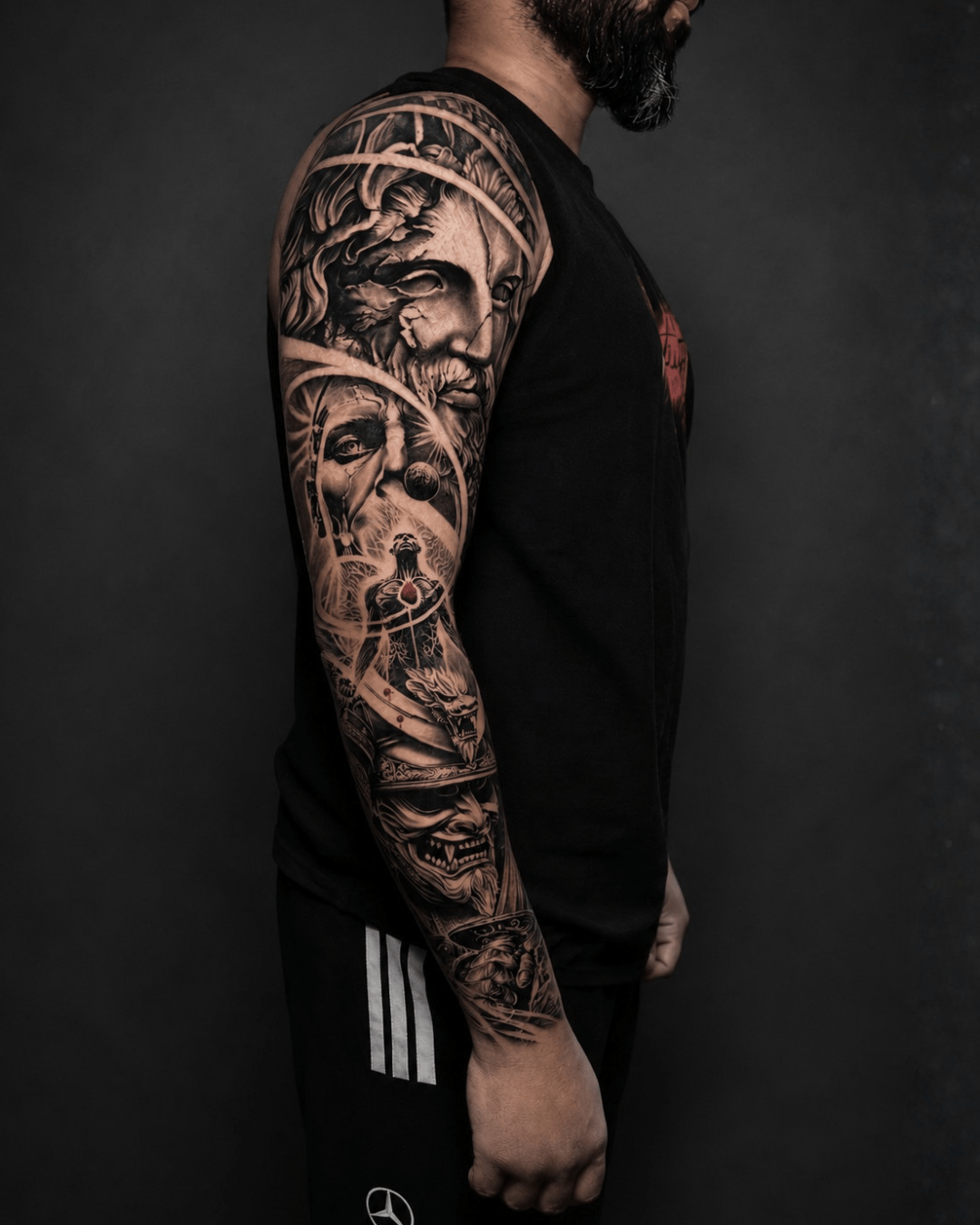
This full-sleeve sculpture tattoo, designed at RJ Tattoo & Piercing Studio in Pune, moves from a cracked marble god at the shoulder, through a fractured cyborg face and a rising human silhouette at the elbow, down to an armored samurai wielding a sword at the wrist. It’s a single continuous story about identity breaking apart and rebuilding itself – brought to life over a free 20-minute design consultation, a 4–5 day design turnaround, and 3–4 tattooing sessions.
Every so often a client walks in with a reference that isn’t really a reference – it’s a thesis. This sleeve was one of those. The brief wasn’t “give me a Greek god and a samurai.” It was closer to: I want something that shows a person falling apart and putting themselves back together, told through history. That’s a hard sentence to tattoo. Here’s how it became an arm.
Sequencing three distinct themes into one coherent sleeve – without it collapsing into three unrelated tattoos on one arm – is exactly the kind of project that separates an established custom studio from a walk-in flash shop. If you’re weighing a tattoo studio near you for ambitious work, this piece is a fair benchmark of what real design planning looks like.
The Concept: Three Ages, One Arm
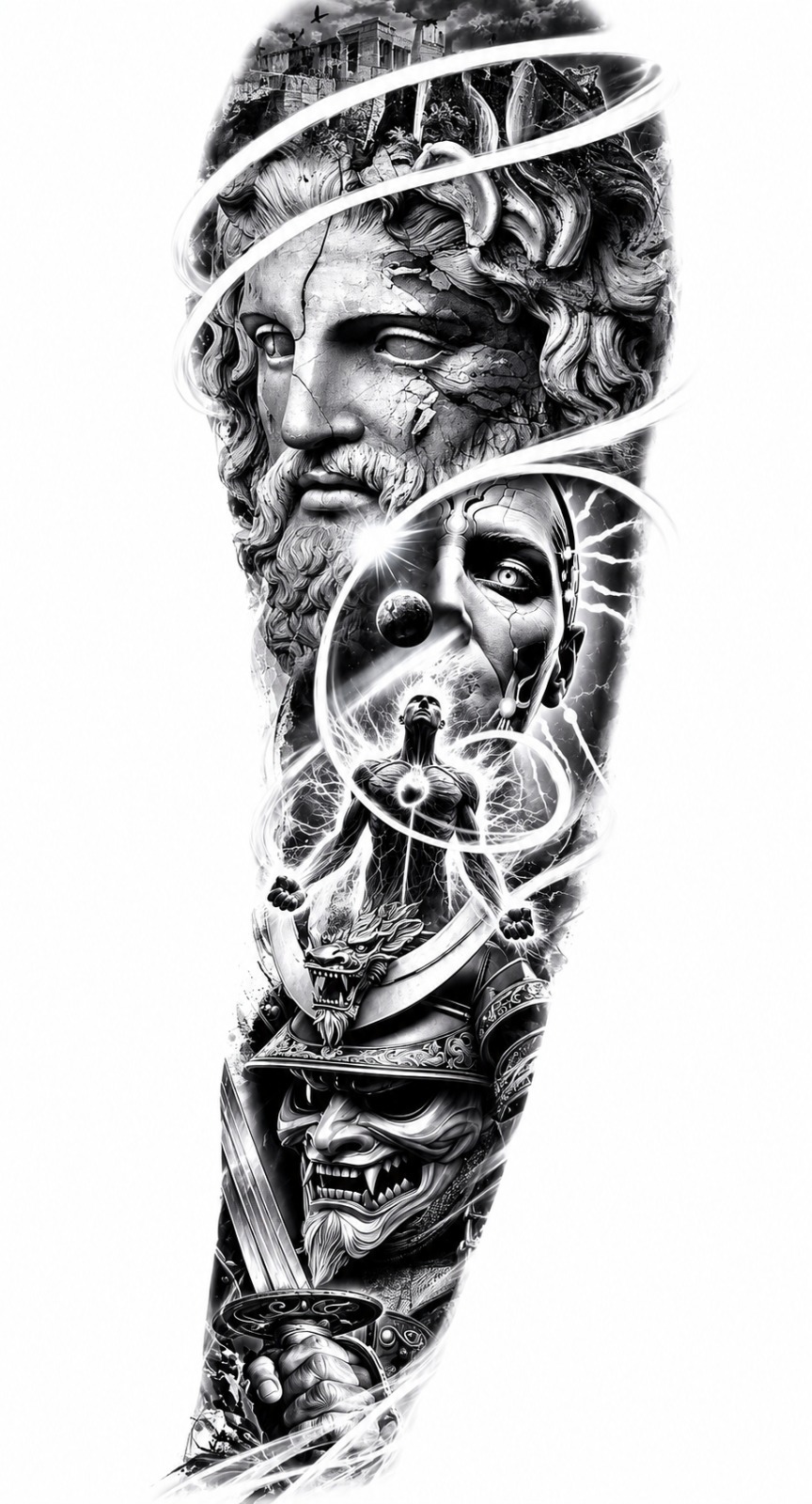
What makes this piece work isn’t any single image – it’s the sequence. Read top to bottom, the sleeve tells a story in three chapters, each one bleeding into the next through swirling bands of light that act like a spine holding the whole composition together. That’s the sculptural discipline we talked about in our last piece on full-sleeve design: nothing here sits in isolation. Every panel has to justify its place next to the ones before and after it.
The Marble God
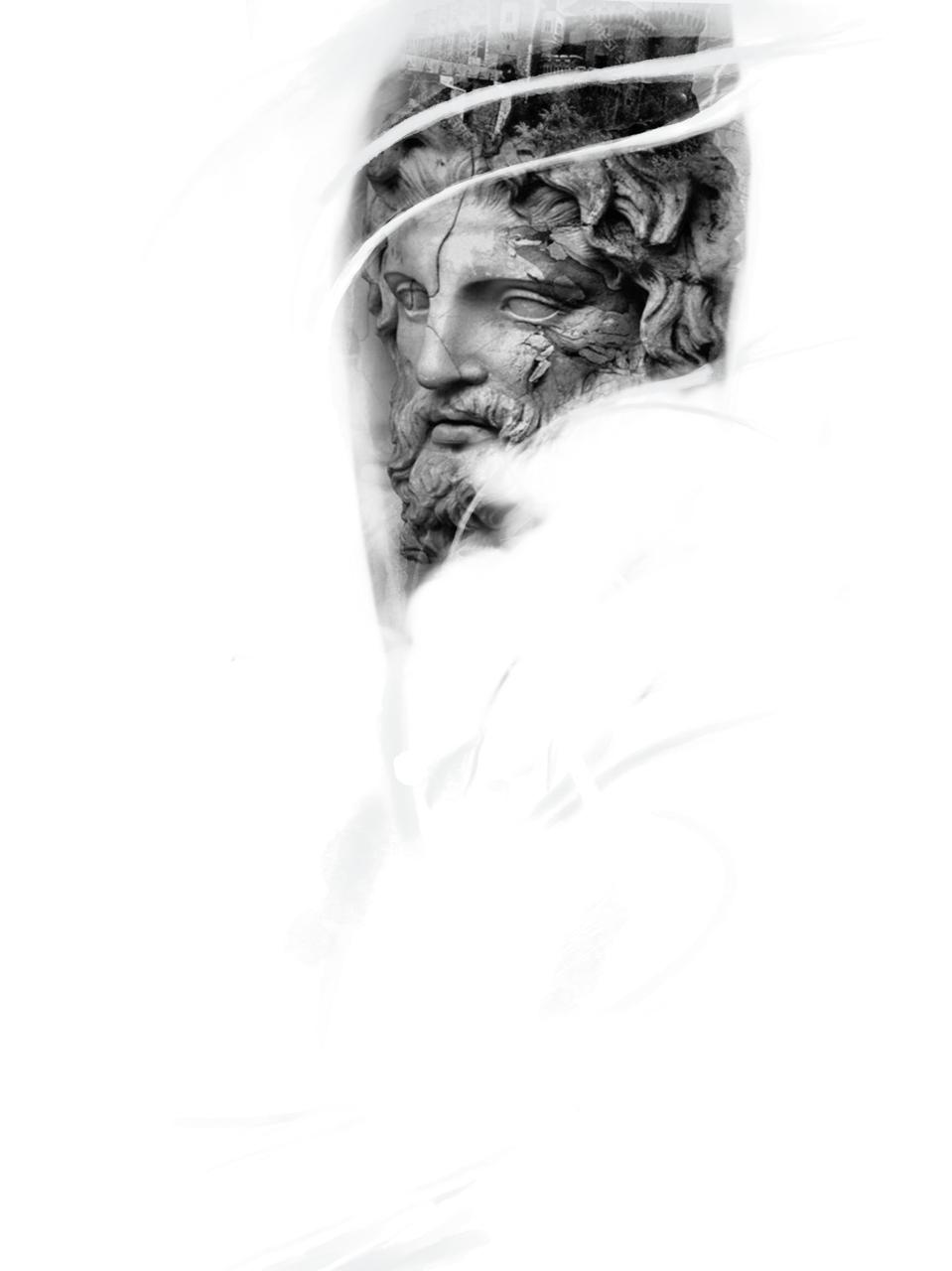
At the shoulder, a cracked marble bust of a bearded god – Zeus-like in bearing, weathered like a ruin unearthed after centuries – anchors the whole sleeve in myth. The stone is deliberately fractured along the cheek and brow, with a hint of ancient architecture rising behind it, almost swallowed by the crown of curls.
This isn’t decorative classicism. It’s the opening line of the story: something ancient, authoritative, and already cracking. In consultation, this is usually the piece clients understand fastest and struggle to place last. A full classical bust is one of the hardest single elements to translate into a sleeve, because it has to shrink and curve around the bicep without losing the detail in the beard, hair, and stone texture that makes it read as marble rather than skin.
The Fracture
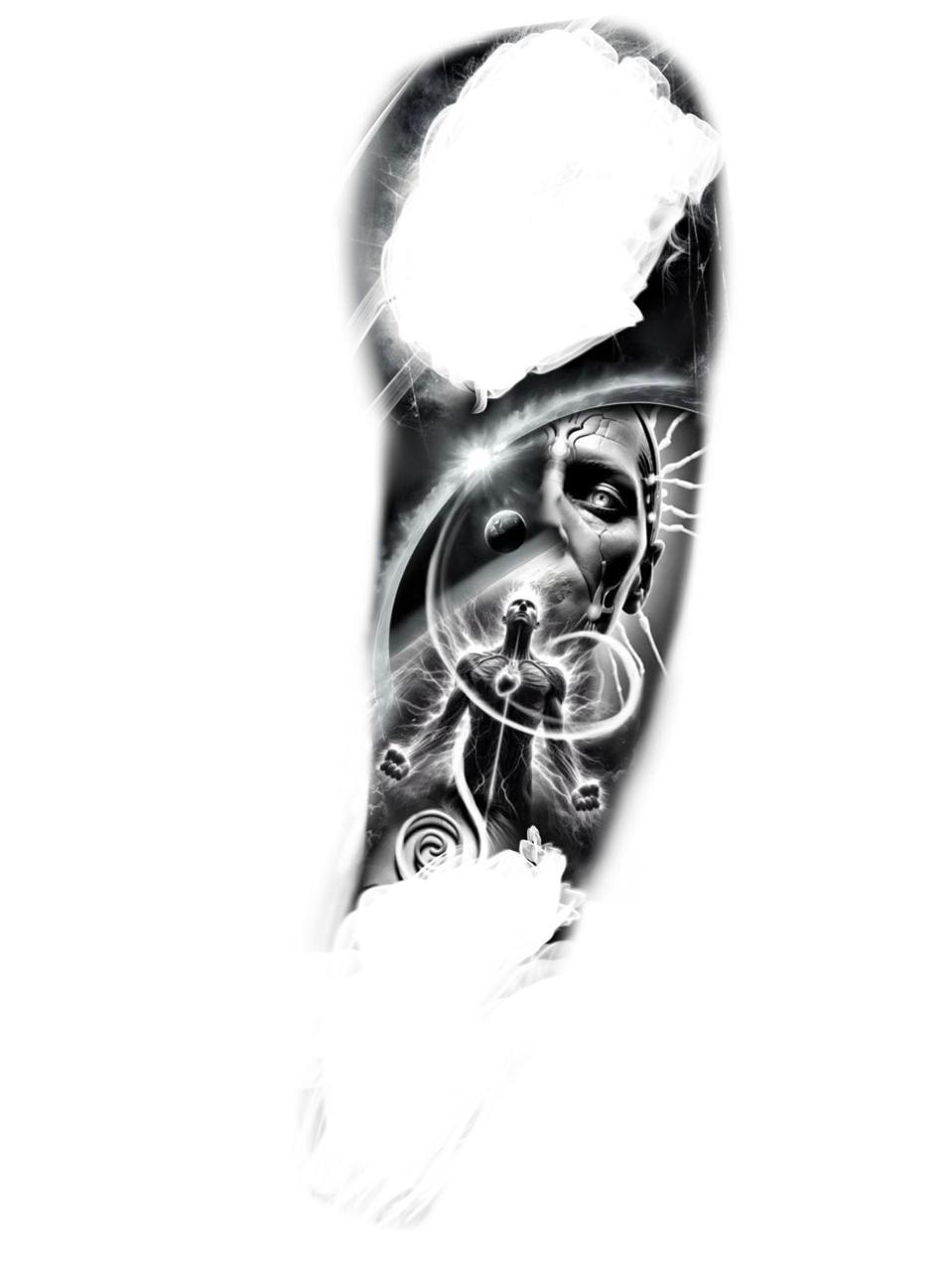
Just past the elbow, the story turns. A second face emerges – half human, half exposed circuitry, cracked open along the same fault lines as the marble above it. A glowing orb hovers near the eye; lightning threads outward from the skull. Beneath it, a human silhouette stands inside a ring of light, arms lifted, chest lit from within – the closest thing this sleeve has to a single emotional center.
This middle chapter is doing the philosophical work of the piece: the god gives way to something more fractured and modern, and out of that fracture, a figure rises anyway. It’s the part of the design where restraint matters most. One extra element here and the whole composition tips into clutter – which is exactly why we walk every client through a digital placement preview before committing a design like this to skin. You need to see, in advance, whether the negative space around that rising figure actually breathes on a real arm, not just on paper.
The Armored Samurai
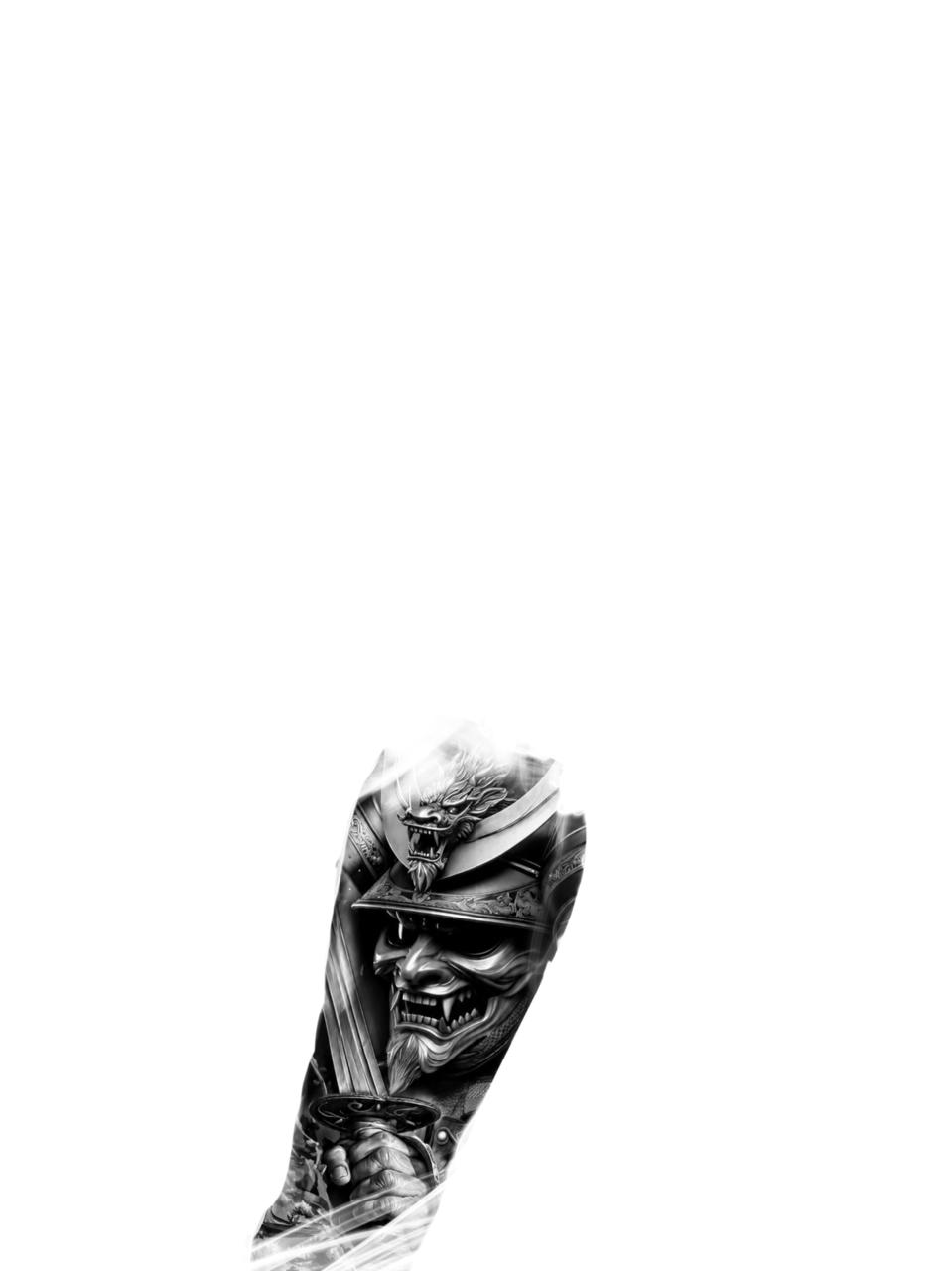
At the wrist, the final chapter takes shape: an armored samurai wielding a sword. This represents the ultimate rebuilding of identity – forged in discipline and ready to move forward. Grounding the sleeve at the cuff, the samurai anchors the entire piece, completing the transformation from the fractured god above into a focused, resilient warrior below.
Why the Swirling Light Bands Matter More Than They Look
It would be easy to dismiss the ribboning light effect wrapping the whole sleeve as pure flourish. It isn’t. In sculpture-style sleeves, negative space and connective elements do the job that a frame does in a painting – they tell your eye where one scene ends and the next begins without literally drawing a line between them. Skip that connective tissue and you get three good tattoos on one arm instead of one great sleeve.
How a Design Like This Actually Gets Built
| Stage | What Happens Here | Timing |
|---|---|---|
| Design Consultation | Reference review, story mapping, sequencing the three “chapters” | 20 min |
| Design Turnaround | Sketch → shading study → full digital mock-up on your arm | 4–5 days |
| Tattooing Sessions | Marble bust → fracture/cyborg panel → samurai forearm | 3–4 sessions |
| Aftercare | Healing guide per session, plus a free touch-up | Within 90 days |
A composition this dense doesn’t get freehanded session to session; the sequencing has to be locked at the design stage, because each panel’s scale and shading depend on what sits above and below it. That’s also why the consultation, short as it is, matters so much – it’s where we agree on the story order, not just the imagery.
Frequently Asked Questions
Look for a studio with a portfolio of multi-theme, large-scale work, not just single-image tattoos. Sequencing several ideas into one sleeve requires more design planning than a standard piece.
Yes. Alongside custom tattoo work, we offer ear piercing, nose piercing, and general piercing services in Pune under the same hygiene standards as our tattoo sessions.
Yes – if the elements are visually linked through repeated motifs and connective shading such as light bands or smoke, distinct themes can read as one continuous composition rather than separate tattoos.
A multi-theme full-sleeve design typically takes 4–5 days from initial sketch to a finalized digital mock-up, once the concept and sequencing are agreed on during the free design consultation.
Not necessarily. Dense detail work is usually completed in the standard 3–4 sessions, since session count depends more on total surface area and shading depth than on how many distinct themes the design includes.
No. Healing time depends on total ink saturation and session size, not subject matter, so the same 2–3 week healing window per session applies.
Want a Sleeve With This Much to Say?
If your idea for a sleeve is less “one image” and more “a story in three acts,” that’s exactly the kind of brief we like getting. Bring your references to a free 20-minute design consultation at RJ Tattoo & Piercing Studio in Pune, and let’s figure out the sequence together.
Beyond custom sleeve work like this, we also handle ear piercing, nose piercing, and broader piercing services under the same hygiene and consultation standards used for tattoo work.