The Evolution of Tattooing in India: From Traditional Markings to Modern Realism
Tattoos are not a “Western import” to India; indigenous tribes have been practicing Godna and Pachakuthu for centuries as marks of identity, spirituality, and medicine.
The urban stigma surrounding tattoos grew during the 20th century, associating ink with rebellion or criminality.
Over the last 20 years, professional studios brought hospital-grade hygiene and global artistic techniques to India, shifting tattoos back to being celebrated as fine art.
Today, artists at RJ Tattoo Studio are blending ancient Indian motifs (mandalas, deities) with cutting-edge global styles like hyper-realism and fine-line geometry.
When you walk through the streets of Pune today, it is completely normal to see college students, software engineers, doctors, and business owners proudly displaying detailed, custom tattoos.
But as a tattoo artist who has been in the Indian industry for nearly two decades, I clearly remember a time when this wasn’t the case. Twenty years ago, walking into an urban office with a visible tattoo was a massive taboo. Many people still mistakenly believe that tattooing is a “Western trend” that India recently imported via pop culture and movies.
Nothing could be further from the truth.
India has one of the oldest, richest, and most profound tattooing histories in the world. The journey of how we went from ancient tribal markings in the forests of central India to hyper-realistic custom sleeves in modern, sterile studios like RJ Tattoo Studio is a fascinating story of cultural evolution.
Here is how tattooing in India survived, evolved, and ultimately thrived.
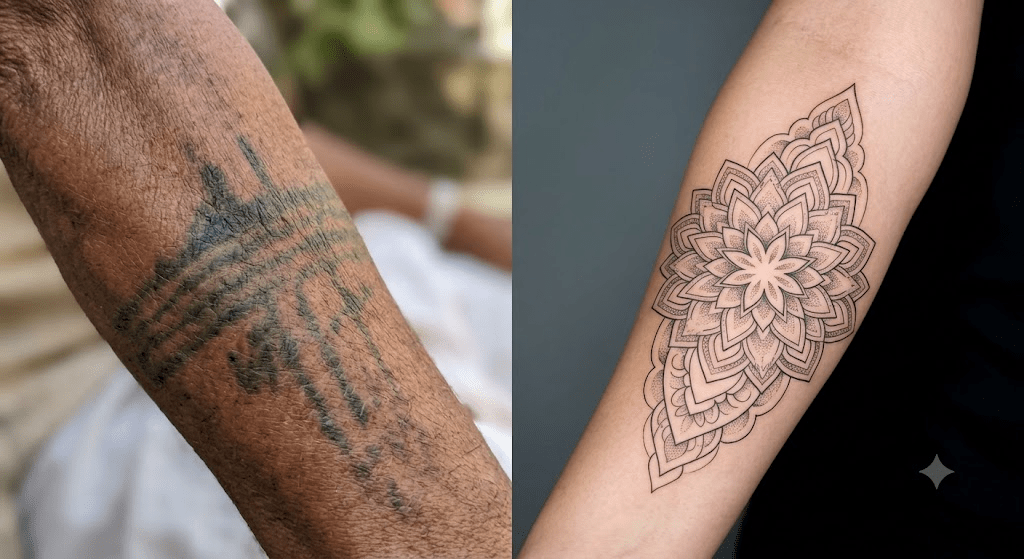
1. The Ancient Roots: Godna and Pachakuthu
Long before electric tattoo machines and Instagram, tattooing was an integral part of indigenous life across the Indian subcontinent.
In the northern and central tribal belts (particularly among the Baiga, Gond, and Santhal tribes), the practice is known as Godna. In the south, it is often called Pachakuthu. These weren’t decorative fashion statements; they were deeply functional, spiritual, and social markers.
Identity and Rites of Passage: For many tribes, tattoos were the ultimate mark of belonging. The Rabari women of Gujarat, for example, are famous for their intricate geometric tattoos that cover their arms, necks, and faces, signifying their transition into womanhood and marriage.
Spiritual Protection: Ancient Indians believed that earthly possessions could not be carried into the afterlife. Tattoos were considered the only jewelry that the soul could take to the next world. They were often applied to protect the wearer from the “evil eye” or demonic spirits.
Medicinal Tattoos: Much like ancient acupuncture, tribal elders would often hand-poke specific dots and lines onto joints and nerve centers to treat chronic pain, rheumatism, and illnesses.
The ink was traditionally made from soot, crushed leaves (like the juice of the bhel tree), and breastmilk or cow urine, tapped into the skin using sharpened bamboo, thorns, or bundles of needles.
2. The Era of Stigma (The 20th Century)
If tattoos were so deeply rooted in Indian culture, why did they become so heavily stigmatized in modern cities?
The shift began during the British Raj. The colonial administration viewed indigenous tattooing as “savage” or “backward.” As India modernized and urbanized in the 20th century, the middle class began to adopt these exact same prejudices.
Tattoos in the cities became associated with three things:
The Lower Classes: A sign of rural poverty or lack of education.
Rebellion and Criminality: Adopted by gangs, criminals in prisons, or anti-establishment rebels.
The “Melas” (Fairs): The only place an urban Indian could get a tattoo in the 1980s or 90s was at a local street fair, where untrained operators used crude, unsterilized, homemade rotary machines built from cassette-player motors. These street tattoos often resulted in severe infections, scarring, and blown-out green ink, further cementing the idea that tattoos were “dirty” and dangerous.
For decades, if you wanted a professional career in India, a visible tattoo was considered career suicide.
3. The Turning Point: The Rise of the Professional Studio
The cultural shift began in the early to mid-2000s, driven by global internet access, the rise of international tattoo reality shows (like Miami Ink), and a younger generation eager to reclaim their individuality.
But the real revolution wasn’t just in the artwork it was in the hygiene.
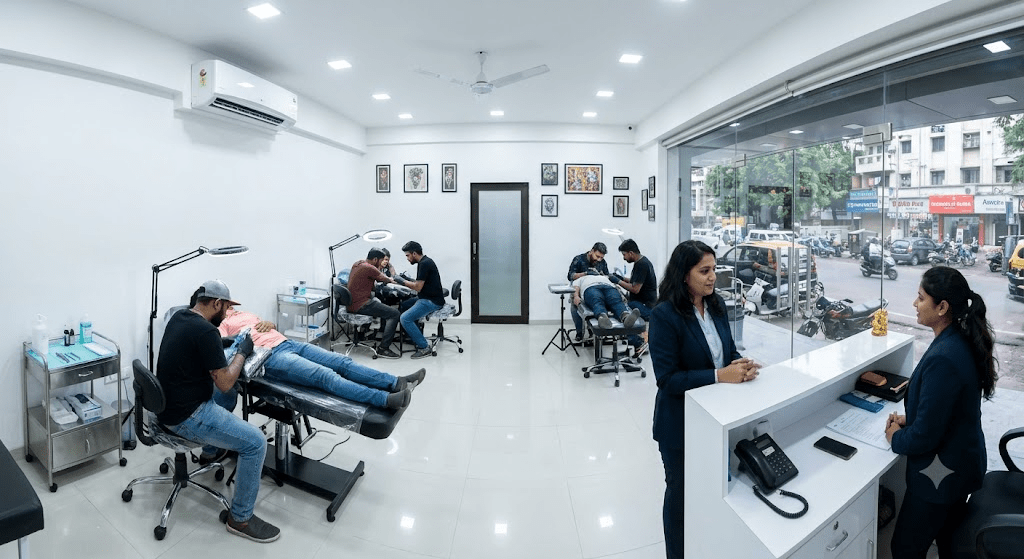
Pioneering artists in India realized that to elevate the art form and erase the stigma, they had to operate at medical standards. This is the exact philosophy we built RJ Tattoo Studio Pune. We introduced hospital-grade autoclaves, single-use blister-packed needles, vegan organic inks imported from the US and Europe, and strict cross-contamination protocols.
When doctors, lawyers, and IT professionals saw that getting a tattoo in a professional Indian studio was as clean and safe as visiting a high-end dental clinic, the stigma rapidly collapsed. Tattoos shifted from being viewed as “street mistakes” to highly respected luxury fine art.
4. Modern Indian Tattoos: Global Techniques, Local Soul
Today, the Indian tattoo industry is exploding, and the level of talent is competing on a global stage. We have moved far beyond the standard tribal bands and simple infinity symbols of the 2000s.
What makes the modern Indian tattoo scene so unique is how we are blending ancient, deeply cultural motifs with cutting-edge global tattooing techniques:
Hyper-Realism meets Mythology
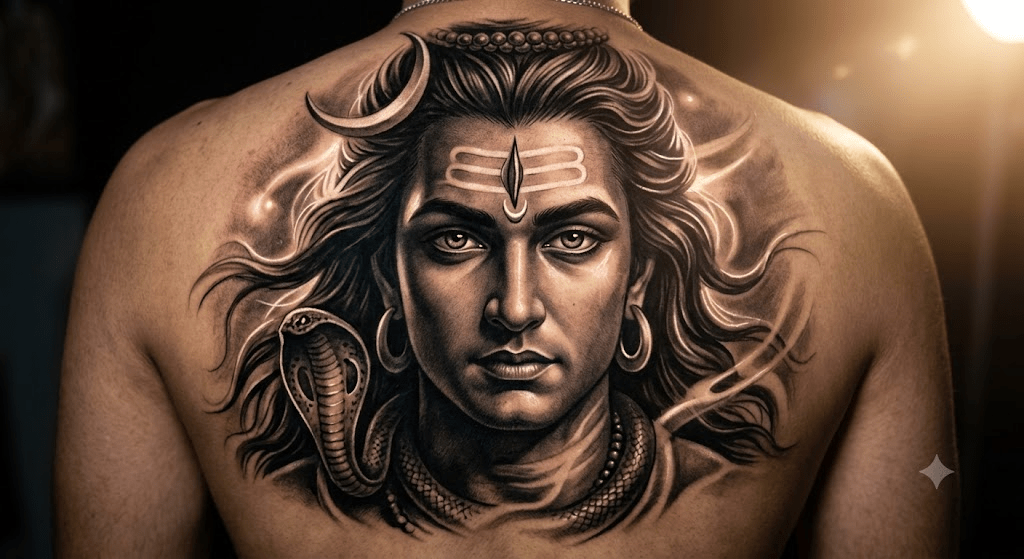
Clients no longer want a simple outline of Lord Shiva or Ganesha. They want high-contrast, black-and-grey hyper-realism. At RJ Tattoo Studio, we are using the same advanced techniques used by portrait artists in Europe to create breathtaking, lifelike depictions of Indian deities, complete with glowing lighting effects and microscopic texturing.
Fine-Line and Micro-Realism
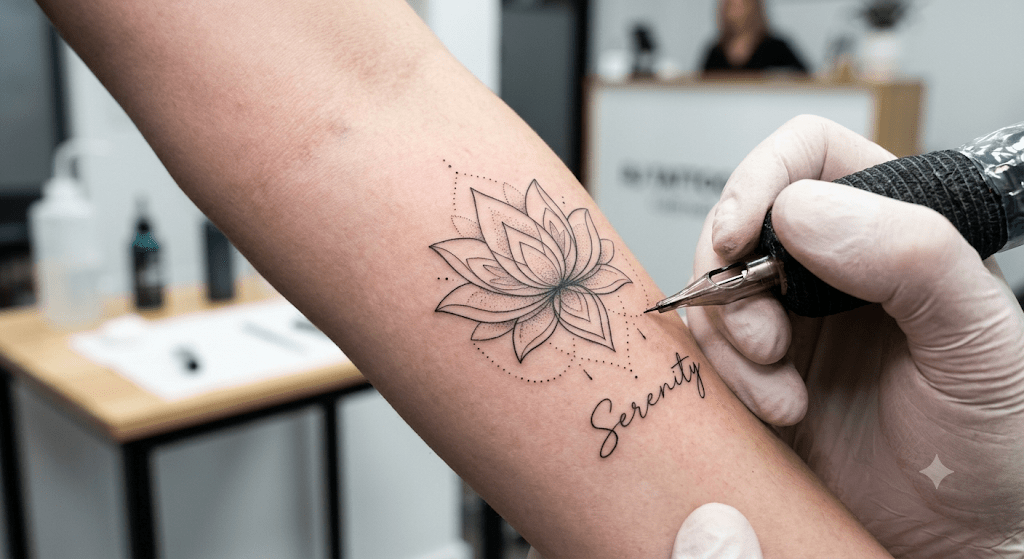
A massive trend in urban India today is fine-line tattooing. Using single-needle configurations, we are taking heavy, traditional Indian jewelry patterns, Sanskrit shlokas, and massive architectural motifs (like temple pillars or Mughal geometry) and shrinking them down into delicate, elegant micro-tattoos.
The Revival of Tribal Geometry
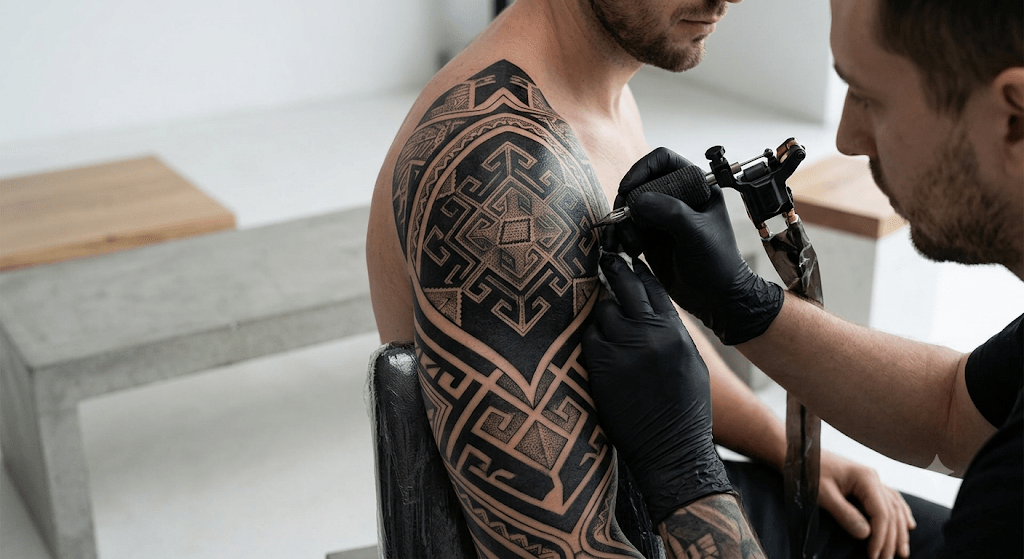
Fascinatingly, we have come full circle. Many modern, educated clients are looking back to their roots, asking for traditional Rabari or Baiga geometric patterns. However, instead of hand-poking them with soot, we are applying these ancient designs using modern rotary machines, ensuring the lines are perfectly crisp, solid black, and designed to age beautifully for decades.
The Bottom Line
Tattooing in India has never just been a trend. It is an ancient tradition that we briefly forgot, only to remember it and elevate it to new heights.
When you get a custom tattoo at a studio in Pune today, you are participating in a global art form, but you are also continuing a deeply Indian tradition of marking your journey, your beliefs, and your identity on your skin.
💡 Ready to tell your story? Whether you want a hyper-realistic mythological piece or a delicate fine-line design, RJ Tattoo Studio in Pune combines world-class safety with elite artistry. Message us on WhatsApp to book a free consultation.
Frequently Asked Questions
Q: Are tattoos finally accepted in Indian corporate jobs?
A: Yes, dramatically so. While certain highly traditional sectors or government services (like the armed forces) still have strict regulations regarding visible tattoos, the vast majority of modern IT, creative, and corporate workplaces in India now view tattoos as normal personal expression.
Q: What is the most popular style of tattoo in India right now?
A: Black-and-grey realism is incredibly popular, particularly for portraits and mythological figures. We are also seeing a massive surge in fine-line minimalism and custom geometric mandalas.
Q: Can traditional Indian hand-poked tattoos (Godna) be done with modern machines?
A: Yes! Many clients bring us reference photos of their grandmother’s traditional Godna tattoos. We can recreate those exact cultural patterns using modern, sterile tattoo machines, ensuring the tattoo is safe, crisp, and permanent without the high risk of infection associated with street-side hand-poking.